Free Shipping worldwide!

OTT vs IPTV: Understanding the Real Difference in Streaming

In today’s digital age, the way we consume television and video content has changed dramatically. The two most commonly discussed delivery methods are OTT vs IPTV, each offering unique advantages and catering to different viewing preferences. Understanding the distinction between the two can help you choose the right streaming solution.
What is OTT?
OTT, or Over-The-Top, refers to media services that deliver content directly to viewers via the internet, bypassing traditional cable or satellite providers. Services like Netflix, Hulu, and Disney+ are classic examples of OTT platforms. These apps allow users to stream movies, TV shows, documentaries, and other on-demand content on a variety of devices such as smart TVs, streaming boxes, tablets, and smartphones.
The main appeal of OTT is its flexibility. Viewers can choose exactly what they want to watch and when they want to watch it, without being tied to a fixed schedule. OTT apps often provide features like personalized recommendations, multiple user profiles, and the ability to resume watching from any device.
However, OTT services do have limitations. Because the content is delivered over the public internet, streaming quality depends heavily on your internet connection. Live events, particularly sports or news, may experience latency or buffering if your network speed is insufficient. In addition, the vast majority of OTT services require separate subscriptions, which can add up if you use multiple platforms simultaneously. This becomes especially important when comparing OTT vs IPTV, because users may weigh subscription costs and content variety differently depending on their needs.
What is IPTV?
IPTV, or Internet Protocol Television, delivers television content over a private or managed internet network, often provided by telecom operators or streaming box services. Unlike OTT, which relies on the public internet, IPTV streams can utilize dedicated servers, which often results in more stable and consistent viewing experiences, particularly for live TV channels.
IPTV services typically provide access to hundreds of live channels, including news, entertainment, sports, and international programming. Many IPTV platforms also include on-demand content, allowing viewers to catch up on shows or movies. Advanced features like time-shifting, playback, and parental controls are often integrated directly into the IPTV service, giving users more control over their viewing experience.
The key advantage of IPTV is its reliability. Because the service can be delivered over a managed network, buffering and lag are minimal, even during high-traffic periods. This makes IPTV particularly attractive for households or individuals who prioritize live TV or sports events. It’s also a major differentiator in the ongoing comparison of OTT vs IPTV, especially for viewers who value stable live channel performance. On the downside, IPTV often requires compatible devices and may involve setup steps that are slightly more complex than simply installing an OTT app.
OTT vs IPTV: Key Differences
To fully understand the distinctions between OTT vs IPTV, consider the following comparison:
| Feature | OTT | IPTV |
| Content Delivery | Over the public internet | Over a private or managed network |
| Primary Focus | On-demand movies, series, and video content | Live TV channels, with some VOD options |
| Subscription Model | Usually individual apps, each requiring a separate subscription | Often a single service covering multiple channels and content types |
| Device Compatibility | Wide range: smart TVs, phones, tablets, streaming devices | Usually requires a dedicated set-top box or IPTV-compatible device |
| Reliability | Dependent on internet speed; may buffer during peak hours | Highly stable, minimal buffering due to managed delivery |
| Features | Personalized recommendations, multiple profiles, cross-device resume | Live TV, playback, time-shift, parental control |
This table clearly illustrates that OTT and IPTV serve different purposes. While OTT emphasizes flexibility and on-demand content, IPTV excels in stability and live TV delivery. For users who consume a mixture of on-demand content and live channels, devices that support both OTT apps and IPTV services provide the most comprehensive viewing experience.
OTT vs IPTV: Subscription and Cost Considerations
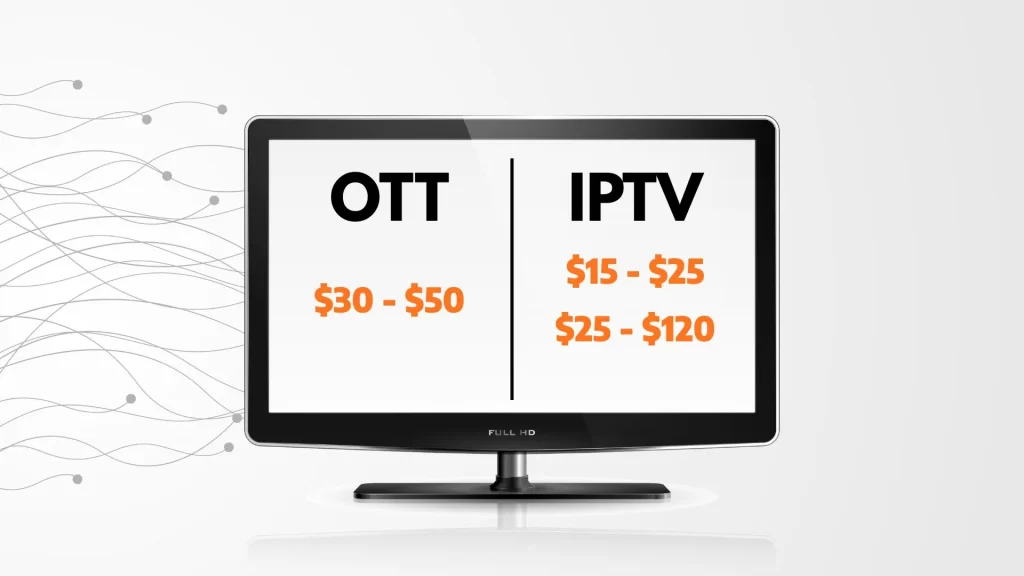
One of the major differences between OTT vs IPTV lies in cost structure. OTT services typically operate on a per-app subscription basis. For example, subscribing to Netflix, Hulu, and Disney+ separately may add up to $30–$50 per month. By contrast, many quality IPTV services charge a single monthly fee, and pricing tends to be quite modest: Most mid‑tier IPTV subscriptions run around $15–$25/month, while more comprehensive “premium” plans typically fall in the $25–$120/month range.
That lower monthly cost is only part of the appeal. While the upfront cost of a streaming device capable of receiving IPTV may be higher, such a TV box with all channels often becomes a long‑lasting investment. Over time, the total cost can be lower than juggling multiple OTT subscriptions. Once set up, it covers a broad variety of content — live TV, VOD, sports, global channels — often without additional monthly charges beyond the base fee.
OTT vs IPTV: Content Variety
Another critical difference is the type of content provided by OTT vs IPTV. OTT platforms are primarily focused on on-demand media. They allow viewers to binge-watch entire seasons, explore movies from multiple genres, and enjoy specialized content like documentaries, reality shows, or original series. The appeal of OTT is in its convenience.
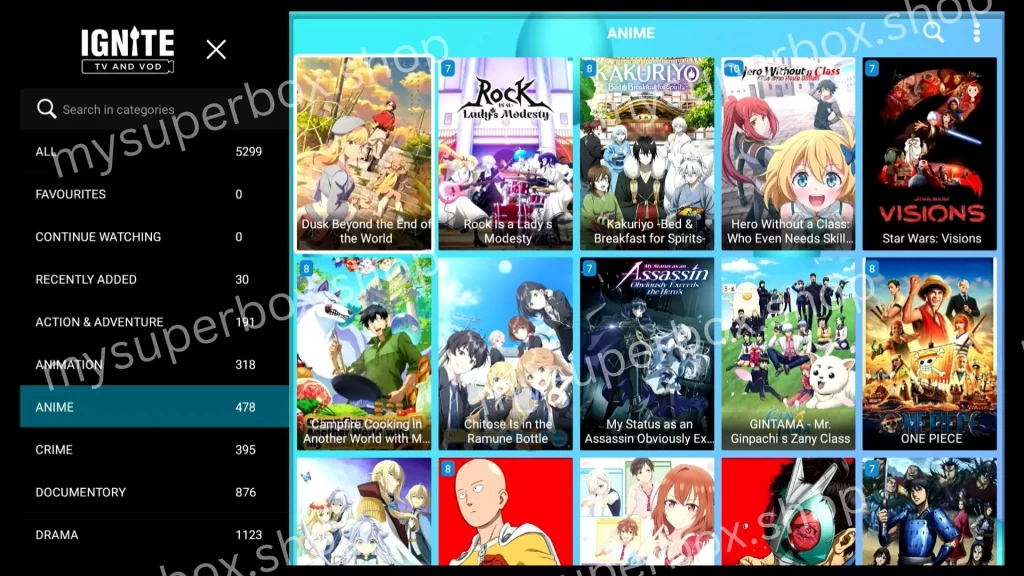
IPTV, conversely, is structured around the traditional TV experience, enhanced by modern technology. Viewers can tune in to live news, sports, and global channels without worrying about scheduling conflicts. Many IPTV services also integrate on-demand content, but the focus remains on live programming.
Choosing the Right Solution
When deciding between OTT vs IPTV, your choice should depend on your viewing habits and priorities:
- For hybrid users: Many modern streaming boxes support both OTT apps and IPTV services, giving the best of both worlds. Devices such as SuperBox S7 Max or DingBox D2 allow users to access live channels, VOD libraries, and OTT apps seamlessly in one interface.
- For on-demand lovers: If your primary interest is streaming movies, TV shows, and original content, OTT platforms provide the most convenience and flexibility.
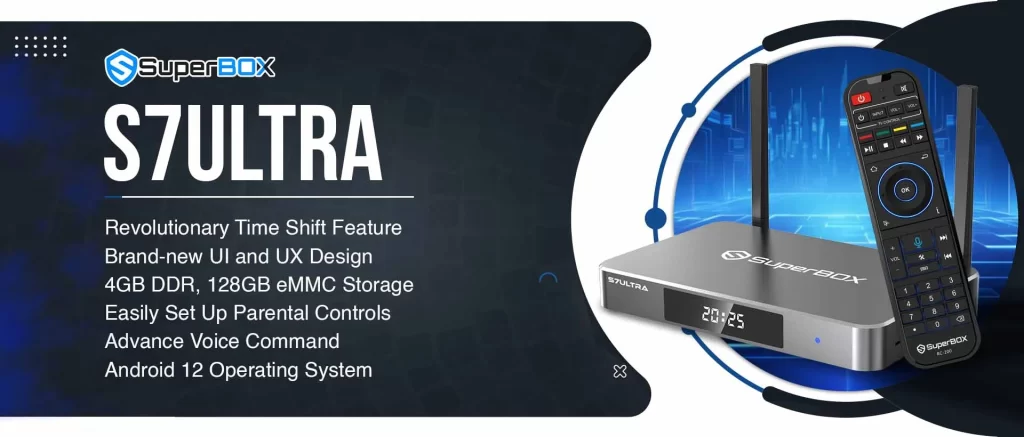
- For live TV enthusiasts: If you watch news, live sports, or prefer a large selection of traditional TV channels, IPTV is usually the better choice.
Summary and Recommendations
In conclusion, the distinction between OTT vs IPTV comes down to delivery method, content type, and viewing priorities. Investing in a streaming device that supports both OTT apps and IPTV ensures you can enjoy the broadest range of content, from binge-worthy series to live sports and news, all from a single interface.
info@bestsuperbox.com
If you’re looking for a reliable option, the SuperBox Official Store offers devices designed to handle both streaming formats smoothly. By considering your viewing habits, budget, and preferred content types, you can make an informed decision and elevate your home entertainment setup.